Fencing for Dogs in Yakima: Height, Gaps, and Gates That Latch
A dog-safe yard comes down to three details most people overlook: the top, the bottom, and the gate.
October 8, 2026 · 3 min read
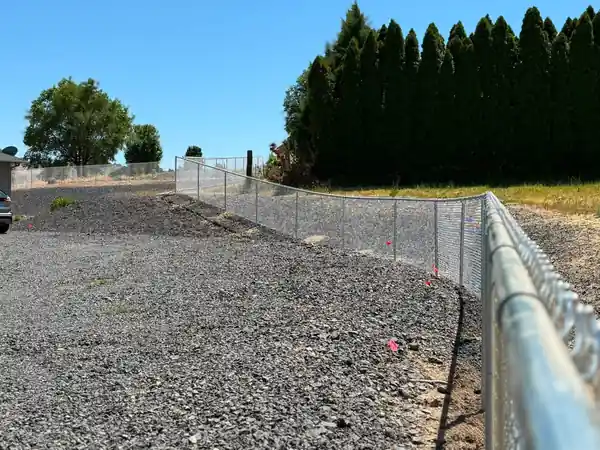
A fence for a dog has a different job than a fence for a property line. It has to keep a specific animal from going over, under, or through it, and a small mistake gets expensive fast when the dog is the one who finds it. A Google review of L S Fencing mentions "a special pet n' paw 4 ft. cyclone fence around my backyard at my new home," installed by Jason. Cyclone fence is another name for chain link, and it's a common choice for exactly this reason.
Why chain link works for dogs
Chain link is strong, it lets the dog see out, and the fabric is hard to chew through or push apart. It handles the wear of a dog running the line every morning. It also doesn't rot or splinter, which matters if your dog likes to chew.
The review above is a good example of the normal use: a new house, a backyard, a fence built to enclose it. The detail that matters is the match between the dog and the fence. Before you pick a height or a gate, think about the dog you have today and the dog you'll have in two years: a puppy grows, and a rescue that seems calm at first may turn out to be a jumper once it settles in.
Pick the height for the dog
Four feet is plenty for many small and medium dogs. Larger or athletic dogs, and breeds that like to climb, may need five or six feet. Chain link has toe-holds in the diamonds, and some dogs use them. Ask yourself honestly how high your dog can jump from a standing start, then add a margin.
Also consider what's beside the fence. A woodpile, a doghouse, a deck, or a raised planter bed along the fence line gives a dog a step up. Keep anything climbable several feet back from the fence.
Watch the bottom edge
The gap under the fabric is the most common escape route. Small dogs squeeze through a few inches of space, and diggers make their own. Good practice:
- Keep the bottom of the fabric close to the ground and follow the ground's contour as it rises and dips.
- Fill low spots along the fence line with soil or gravel so there's no gap at a dip.
- Ask about a bottom tension wire, which holds the fabric edge steady against the ground.
- For dedicated diggers, consider burying a section of fabric or setting a barrier along the base.
Walk the entire fence once it's built, look for dips, and watch where the dog goes. Dogs find the weak spot faster than people do. If you spot a gap in the first week, close it right away, because a dog that gets out once will test that spot again.
Gates are where dogs get out
Most escapes happen at the gate, not the fence. The reasons are usually small ones:
- A gate that sags and no longer meets the latch post, leaving a gap.
- A latch a clever dog can nudge open with its nose.
- A gate left ajar by a delivery driver or a guest.
- A wide gap between the gate bottom and the ground.
A self-closing hinge and a latch that locks on its own help with the human mistakes. A gate post set deep in concrete helps with the sag. L S Fencing builds custom gates and hears about gate problems regularly. Another Google review says, "Always have been able to help with our gate problems in a timely, orderly, and professional fashion."
Consider privacy slats for a barker
If your dog barks at every person walking by, the fence may be the cause. A dog that can see the sidewalk keeps reacting to it. Privacy slats woven into the chain link cut the sight line, and many dogs settle down once the street stops being a show. L S Fencing installs Viewguard slats, and the same chain link frame carries them.
Check the rules before you build
Before you dig, call 811 so underground lines get marked, and ask your city or county about fence height and placement. If you rent, or you live in an association, get permission in writing before anyone sets a post.
L S Fencing is a family fence company in Yakima, founded in 1974, and does chain link in galvanized and black vinyl-coated. Call (509) 452-3000 to talk through a yard for your dog, or walk into the yard at 1711 Swier Lane, Monday through Thursday, 8 to 4. Bring the dog's size and your measurements.
L S Fencing, (509) 452-3000
Call (509) 452-3000More articles
Privacy Slats on Chain Link: When They Make Sense in the Yakima Valley
Slats turn an open chain link fence into a screen, and they come with trade-offs worth knowing before you order.
Galvanized or Black Vinyl Chain Link for a Front Yard
Both fences keep a yard contained, but they look and wear differently once they're standing in front of your house.