Chain link · Yakima since 1974
Chain link fence, set straight and pulled tight
Galvanized or black vinyl-coated, from a four-foot backyard fence to tall screened walls around commercial yards. Built by the same family crew in Yakima since 1974.
Chapter 01
Why chain link fences lean, sag and give up
Almost every tired chain link fence fails the same way. A terminal post, the heavy one at a corner, an end or a gate, was set shallow or in loose ground, and over the years the pull of the stretched fabric tilted it toward the run. Once a terminal leans, every foot of fabric behind it goes slack, and no amount of re-tying will bring it back.
The second failure is sag. Fabric hung with no top rail, or tied to line posts without a tension bar at the ends, belly-droops between posts and wobbles in wind. You see it on old yard fences and on cheap lot fences alike: a wavy top edge, a gap at the bottom, a gate that has to be lifted to latch.
Both problems are decided on the day the fence goes in. That is why we start with the posts and the pull, not the fabric.
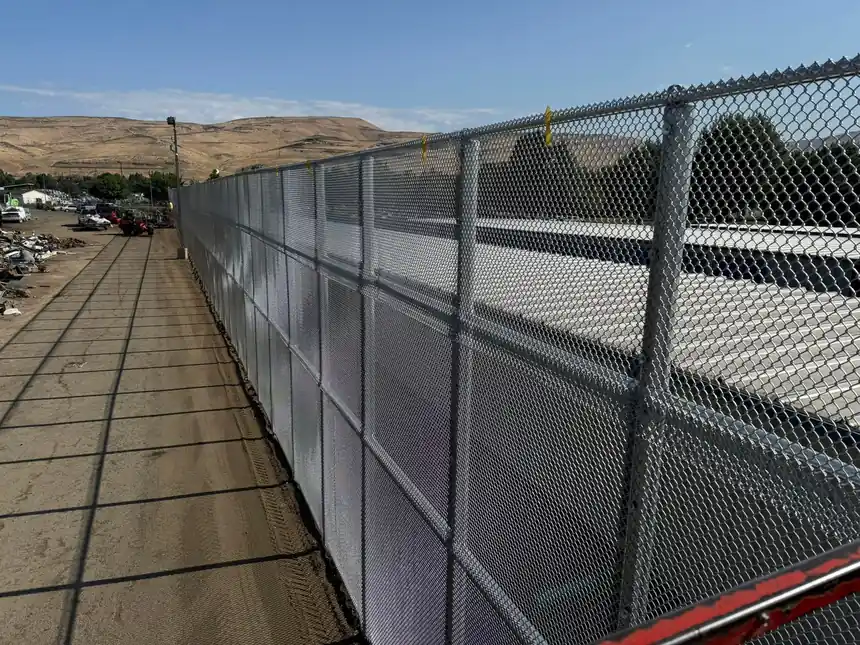
Looking along the top rail of a tall commercial chain-link wall, line posts marching away at an even spacing
How we build a run that stays tight
Terminal posts and line posts are set in concrete, terminals first, and checked for plumb before anything is hung. Line posts go in at an even spacing so the run reads straight from the road. A top rail runs through the post caps and carries the top edge, so the fabric has something rigid to hold to.
At each end, corner and gate, a flat tension bar is threaded through the last row of diamonds and clamped to the terminal post with tension bands. The fabric is stretched with the right tool instead of hand-pulled, then tied to the top rail and line posts so it holds that tension for years.
You can choose galvanized fabric, which weathers to a plain steel grey, or black vinyl-coated chain link, which sits back against a house, a hedge or a hillside. Gates are hung on terminal posts built to take the swing. If you would rather build it yourself, the yard sells the same materials over the counter.
Chapter 03
From a four-foot backyard to a tall commercial wall
The same build runs at every size. A pet fence is the small end: one customer had Jason install a “special pet n' paw 4 ft. cyclone fence” around the backyard of a new home, and the work that earns praise on a short fence is the same attention to the bottom edge, the gate latch and the corner posts that matter on a tall one.
Farther up the scale, on July 8, 2026 the crew finished 800 feet of 5 ft galvanized chain link on a rural property in Selah, a long run where even post spacing and a steady pull on the fabric are the whole job.
At the top end we build tall chain link walls with screen for industrial yards and commercial sites, with line posts well over head height and fabric tied from a lift. Tall fence loads its posts far harder than a yard fence, so the depth and the concrete matter more, not less.
L S Fencing is a Washington licensed fence contractor, STILEID830CL, building chain link across Yakima County from Selah and Union Gap to Moses Lake and the Tri-Cities.
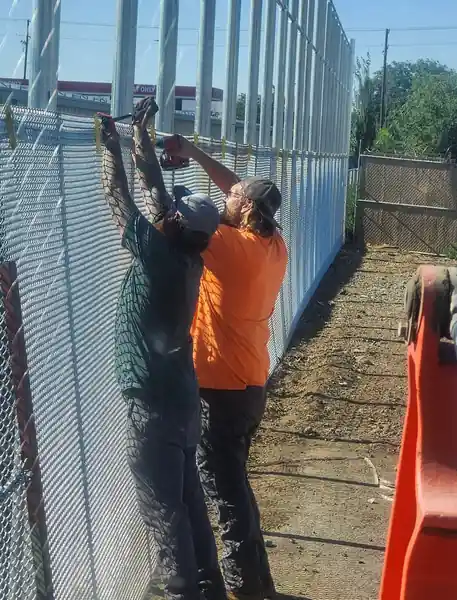
Tying fabric to the rail on a tall run.
In the field
Every tie done by hand, every run checked from the end
We walk a finished run from one terminal post to the other and sight down the top rail. If the line is true and the fabric is tight, the fence is done. If you need the same fabric for a job of your own, the yard on Swier Lane keeps it on the rack, and if the fence you already have needs screening, look at privacy slats.
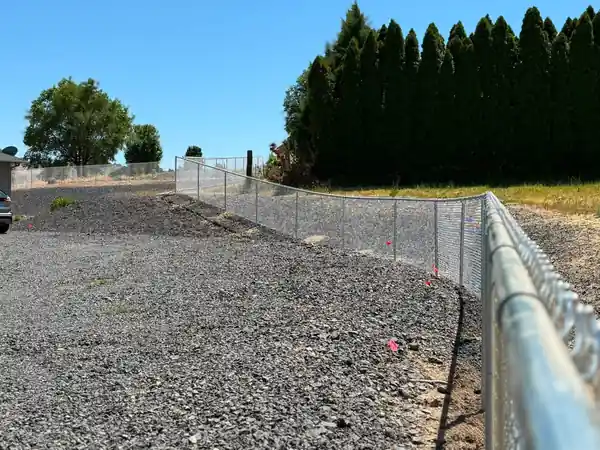
Part of the 800 ft of 5 ft chain link finished in Selah, July 2026.
“Super nice, the companies attention to detail of the job is 2nd to None!!!”